
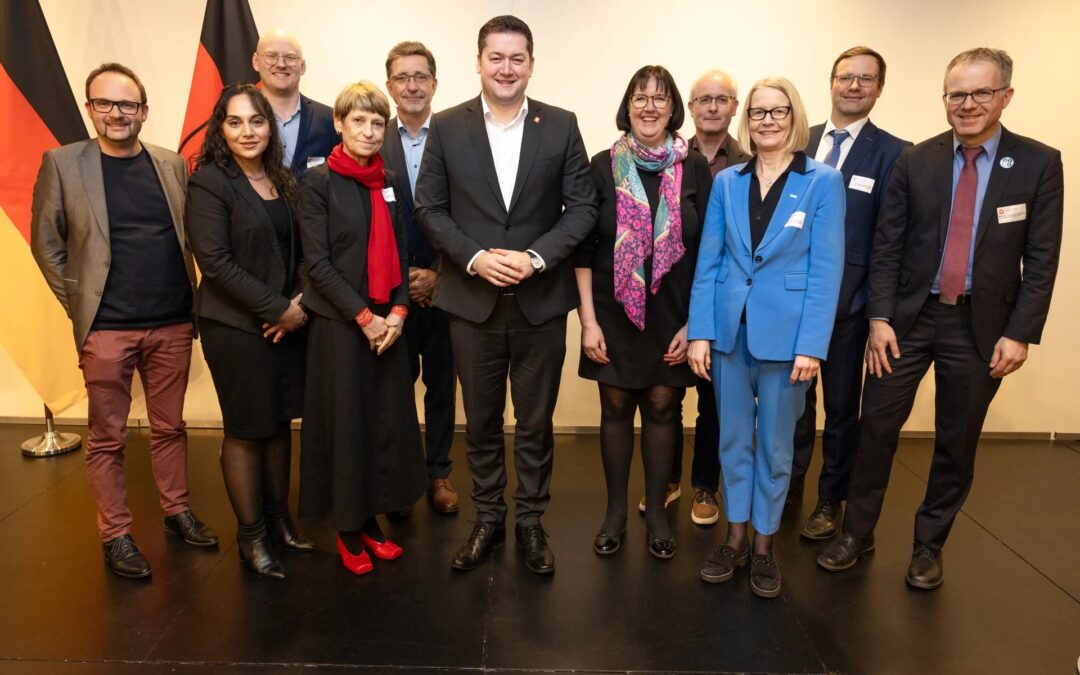
What can you hope for from a parliamentary evening? In many cases, far more than expected. Such an event becomes a test of how well a community understands its strategic needs and how clearly it can communicate them to the policymakers who shape the framework for future innovation. The parliamentary evening in Berlin, hosted by the City of Braunschweig, offered exactly this opportunity. As joint organizers, Braunschweig Zukunft GmbH – Economic Development, Technische Universität Braunschweig, die Physikalisch-Technische Bundesanstalt (PTB) und Quantum Valley Lower Saxony (QVLS) presented a united perspective on why quantum technologies are essential for Germany’s scientific excellence and long-term economic strength.
With around 200 attendees, the event provided an important platform for exchanging perspectives and deepening understanding. It also became clear how strongly the QVLS ecosystem benefits from coordinated support across federal, state and municipal levels. At the federal level, Dr. Alexandra-Gwyn Paetz (BMFTR) emphasized the importance of national technology-transfer instruments such as Clusters4Future and especially QVLS-iLabs, which enable quantum breakthroughs to move from fundamental research into concrete applications. At the state level, Minister Falko Mohrs (MWK) underscored Lower Saxony’s strategic commitment to establishing the region as a leading location for quantum technologies and reaffirmed the long-term political backing for QVLS. At the municipal level, the Mayor of the City of Braunschweig, Dr. Thorsten Kornblum, highlighted how initiatives like QIMP and the QVLS High-Tech Incubator strengthen the foundation for regional quantum start-ups and help ensure that innovative ideas evolve into entrepreneurial success stories.
The evening was further enriched by the presence of influential voices from the quantum community, including Prof. Dr. Cornelia Denz, Prof. Dr. Angela Ittel, Prof. Andreas Waag, Prof. Piet Schmidt, Prof. Christian Ospelkaus, Dr. Nicolas Spethmann, Naz Pourmalek, Heiko Brüning (QubeDot GmbH) and Henning Hahn (QUDORA Technologies). Their contributions added depth to the discussions and helped articulate the needs, priorities and ambitions of the QVLS ecosystem. A special thanks goes to Felix Rundel, who skilfully moderated the stage program and ensured that the complex topics of quantum technology development and innovation policy were communicated with clarity and precision.
Events like this parliamentary evening reveal what ultimately matters: translating scientific expertise into political understanding, aligning regional strengths with national objectives and creating the right conditions for innovation to flourish. If such an evening serves as a measure of how effectively a community can represent its interests, this one set an encouraging and forward-looking signal. QVLS looks ahead with confidence and is committed to continuing the dialogue, building on shared momentum and transforming it into lasting progress for Germany’s quantum future.
Image: © Stadt Braunschweig / Daniela Nielsen